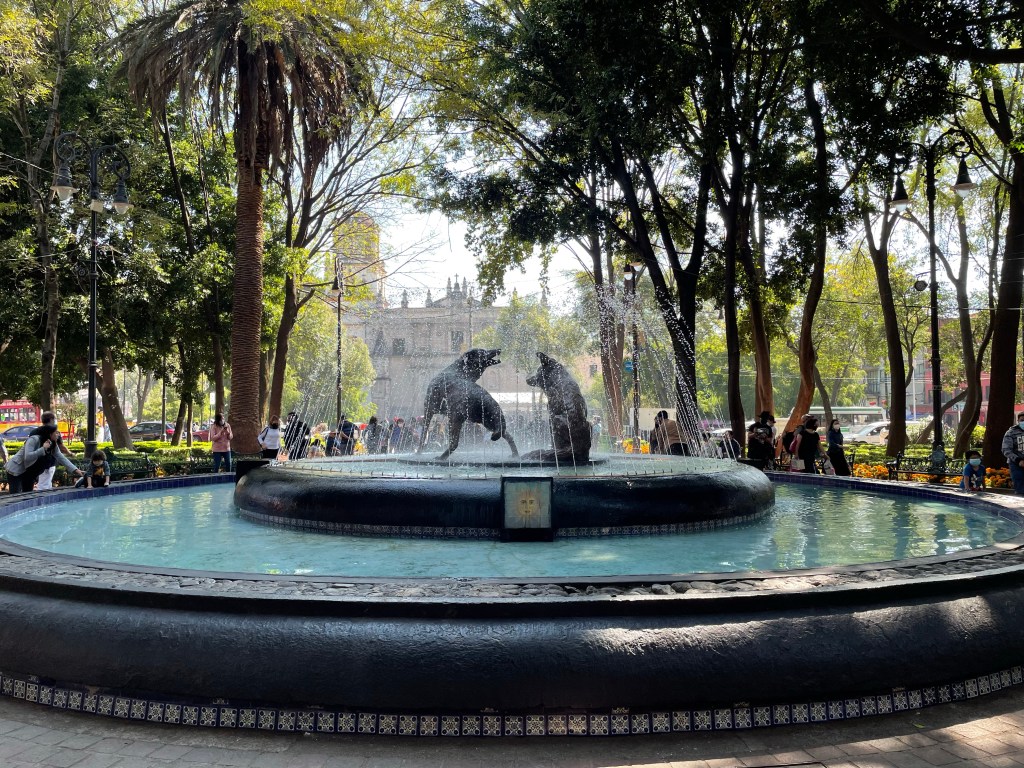
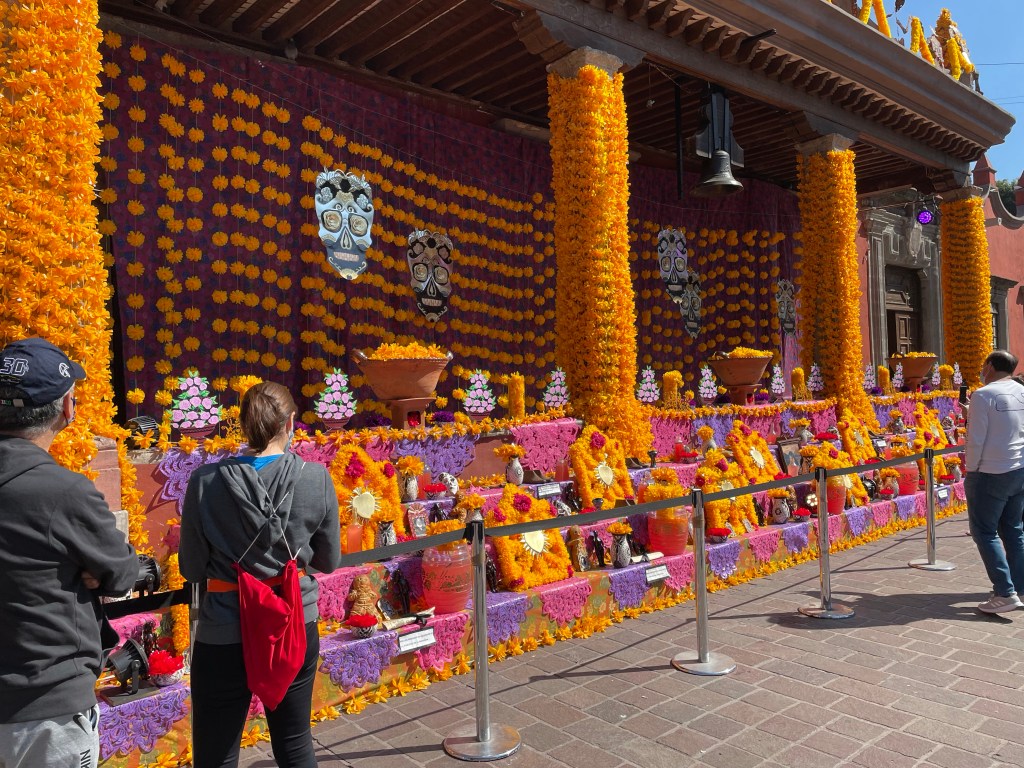
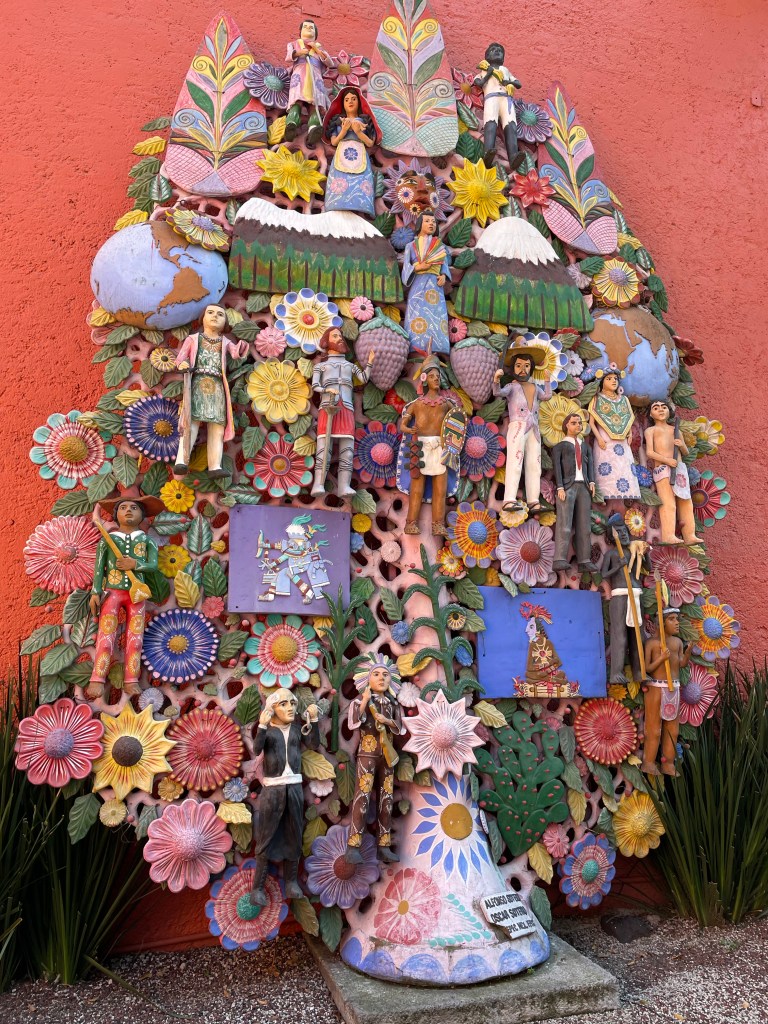
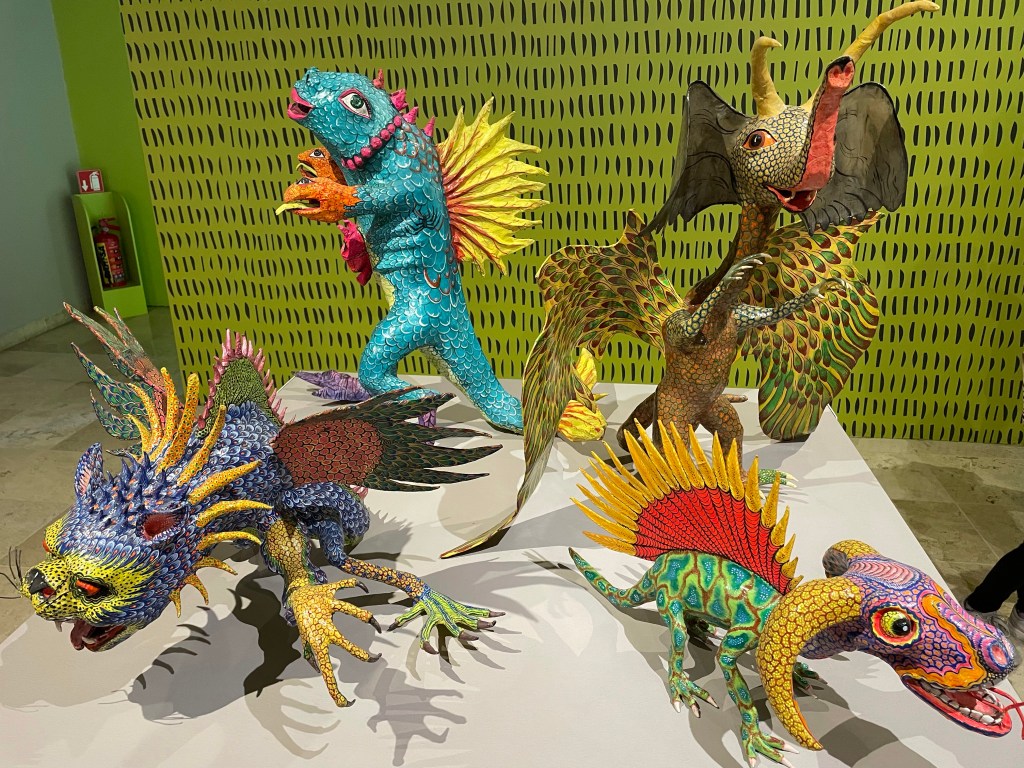
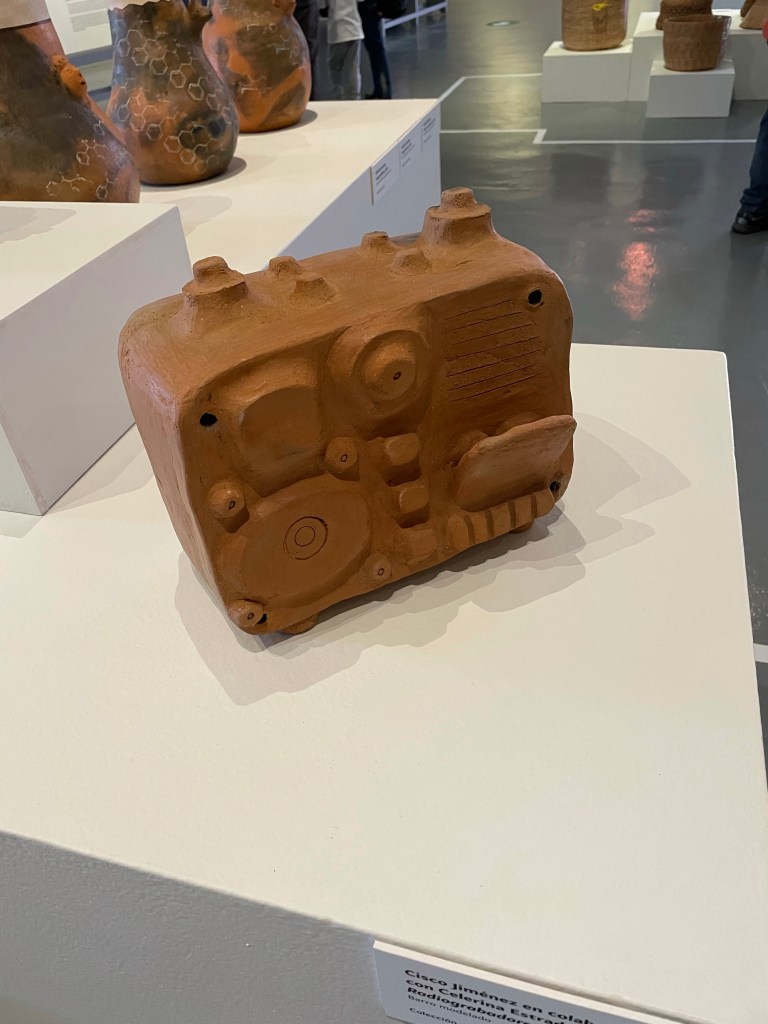
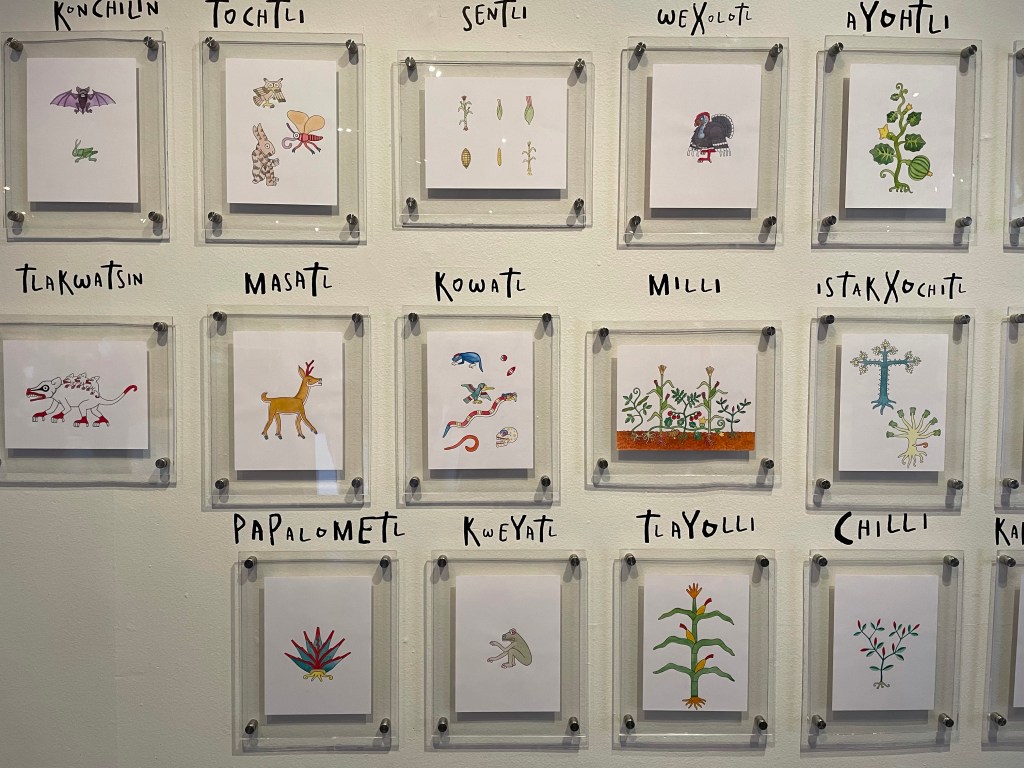
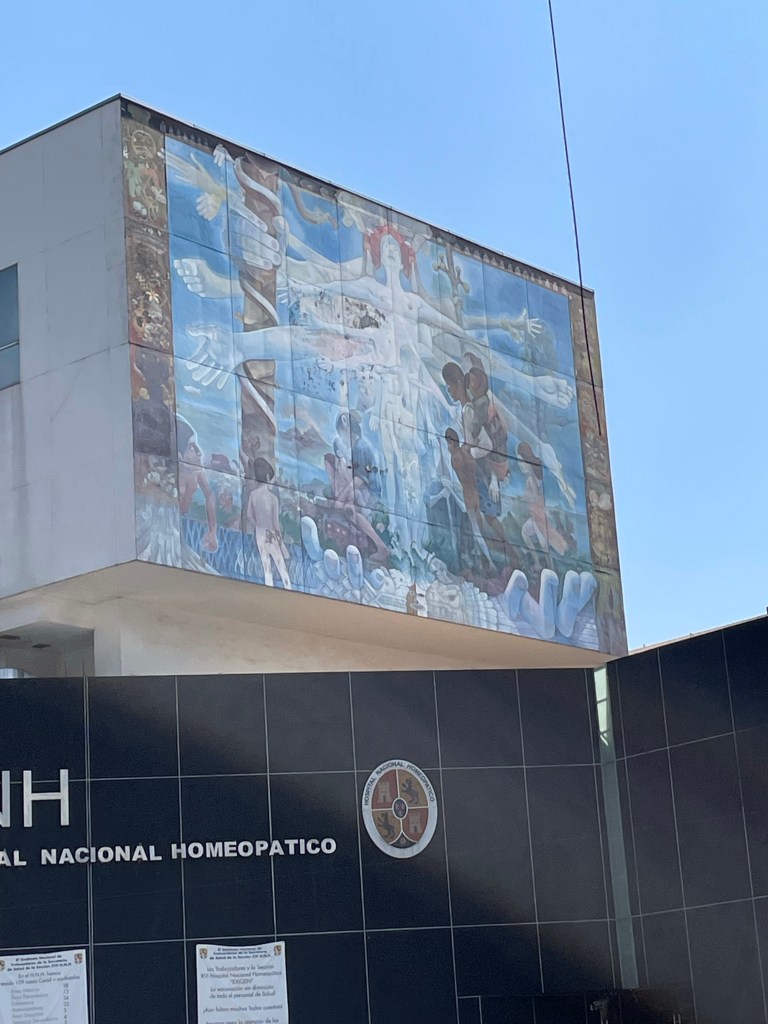
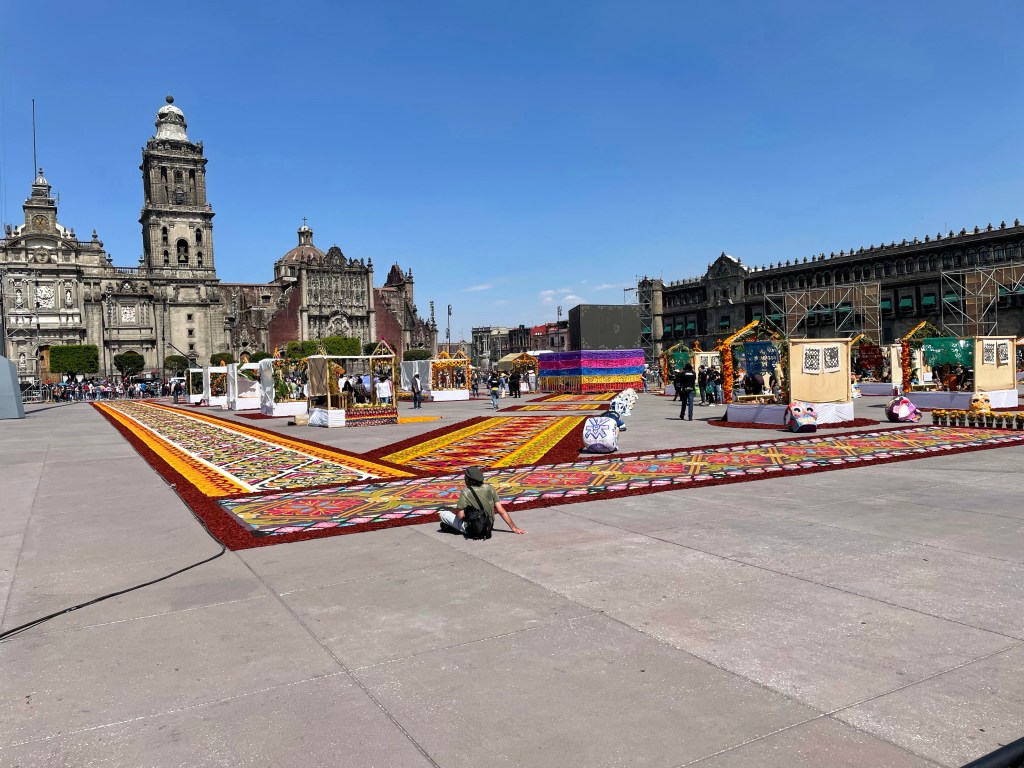
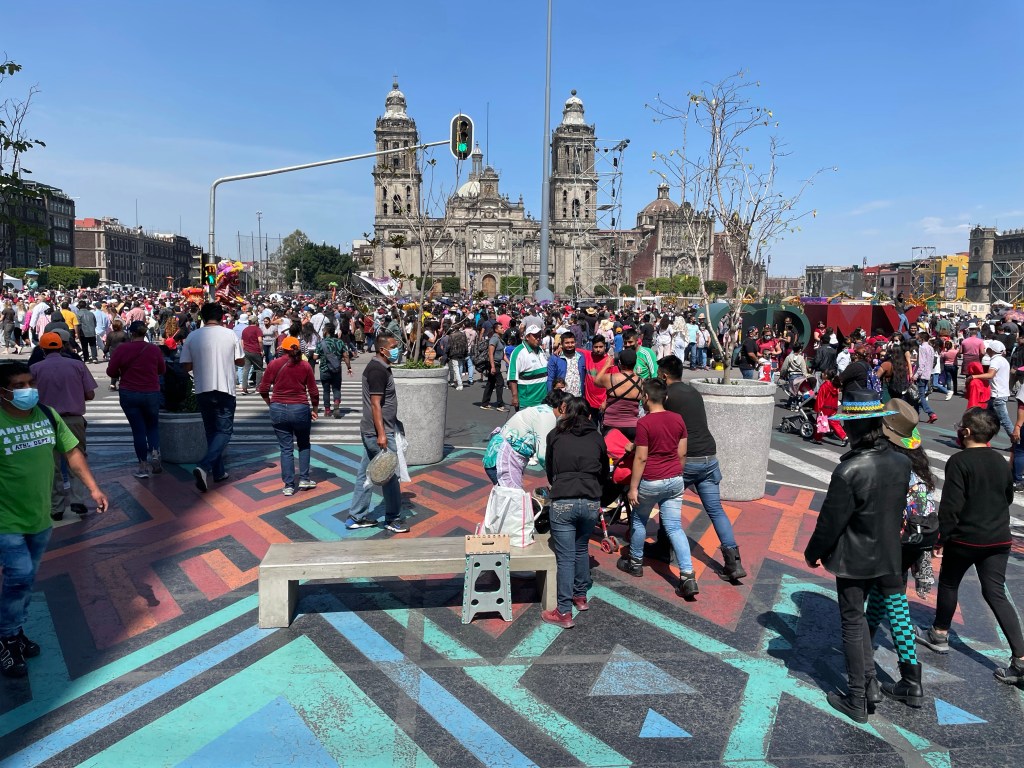
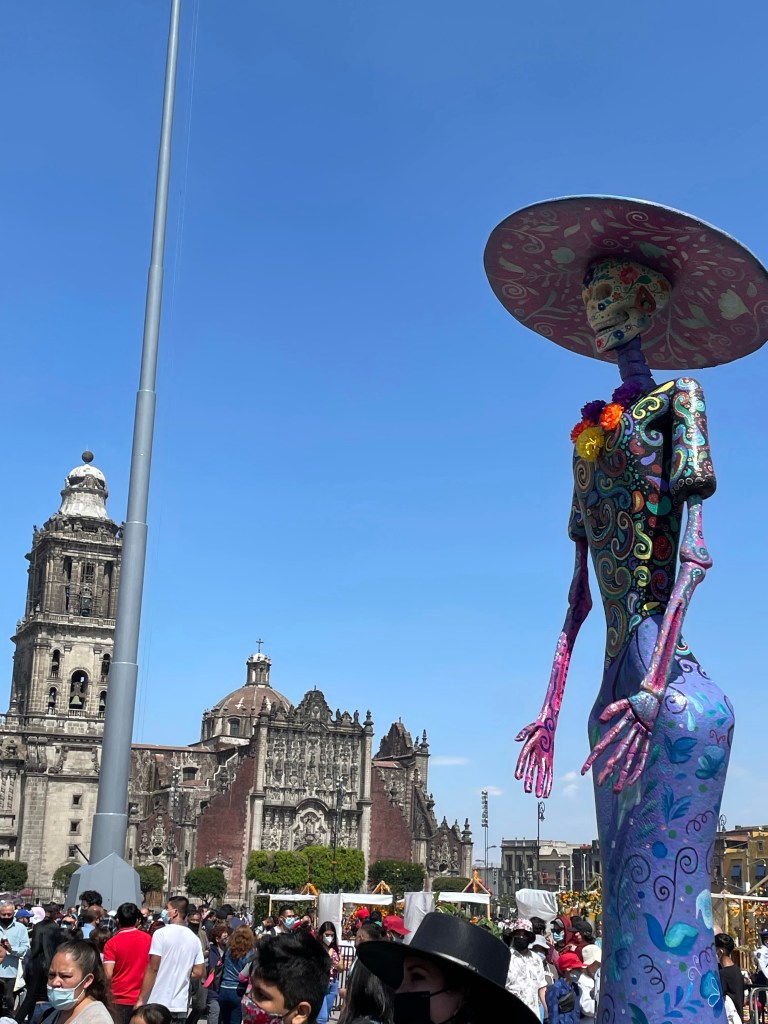
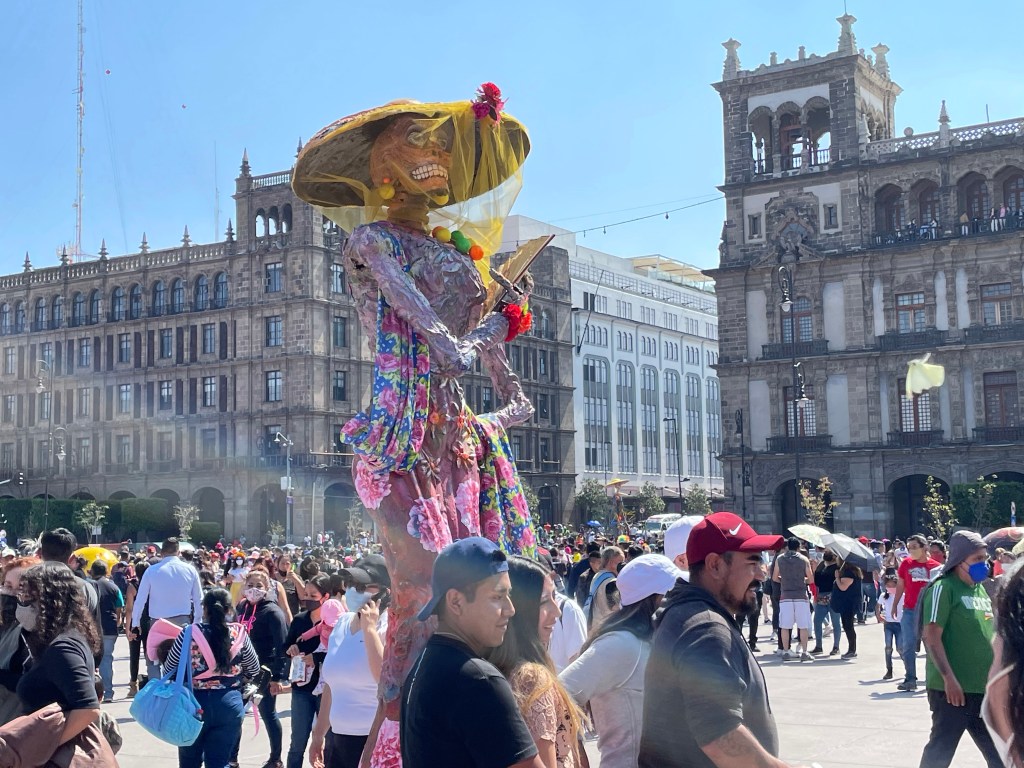
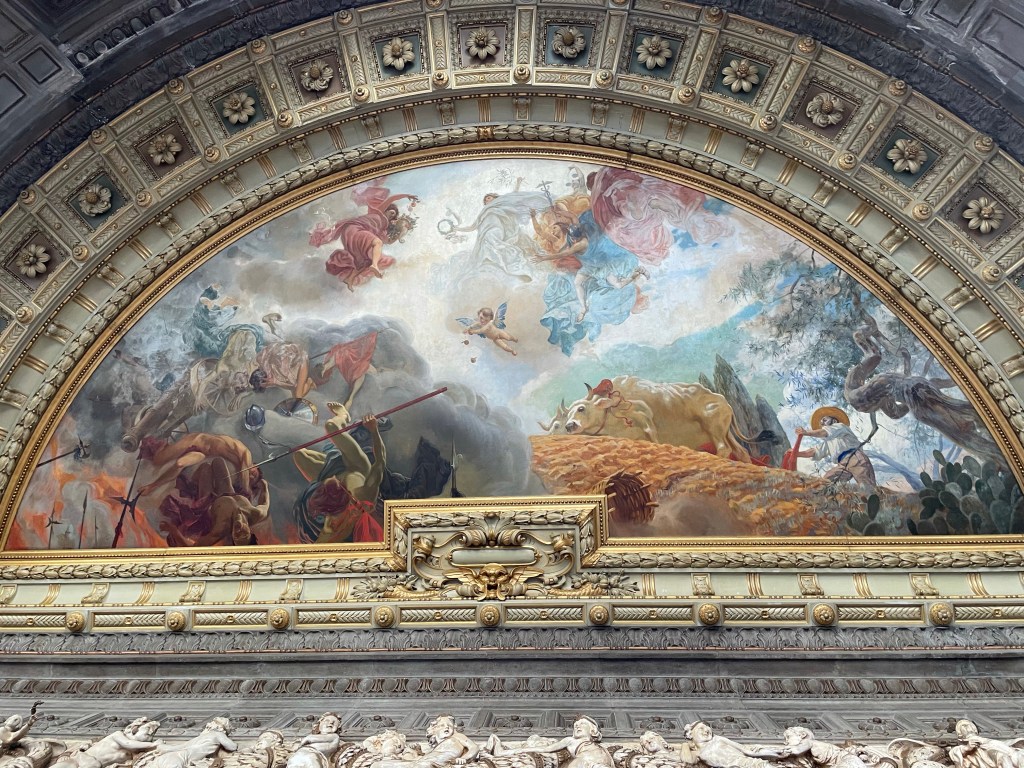
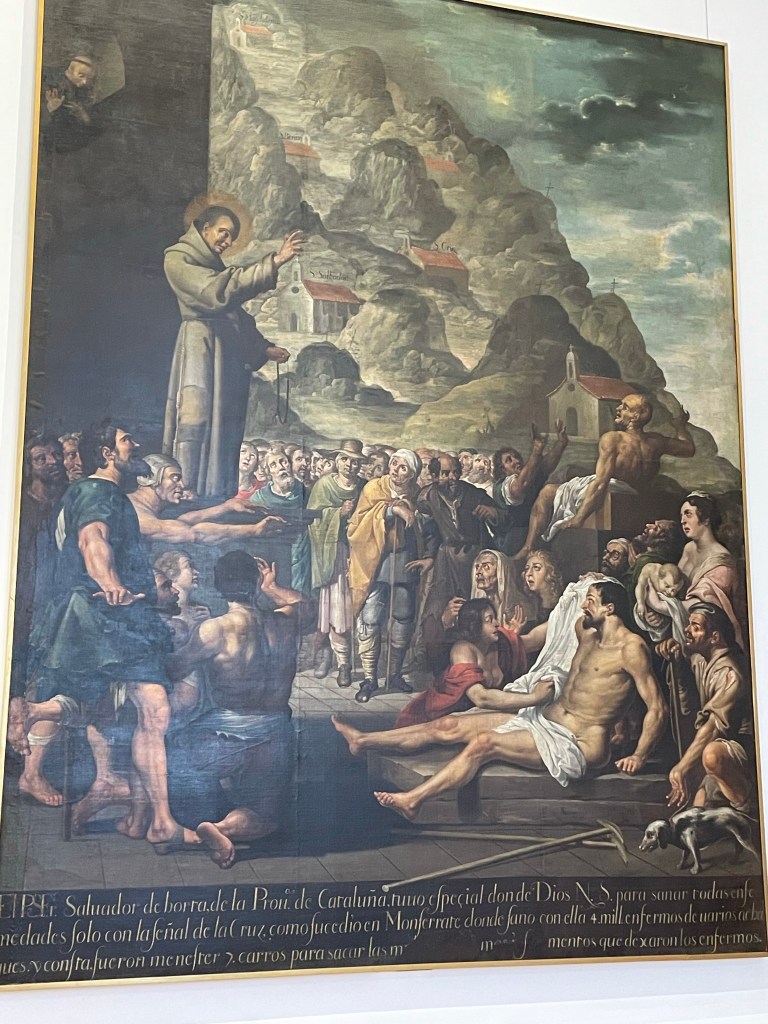
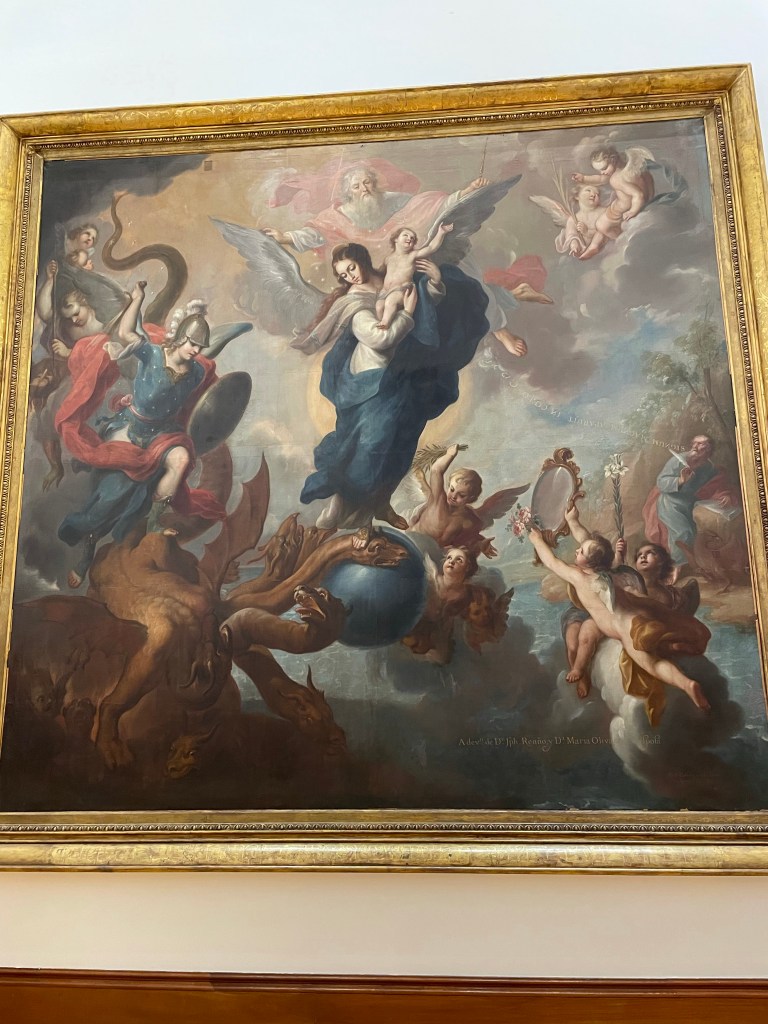
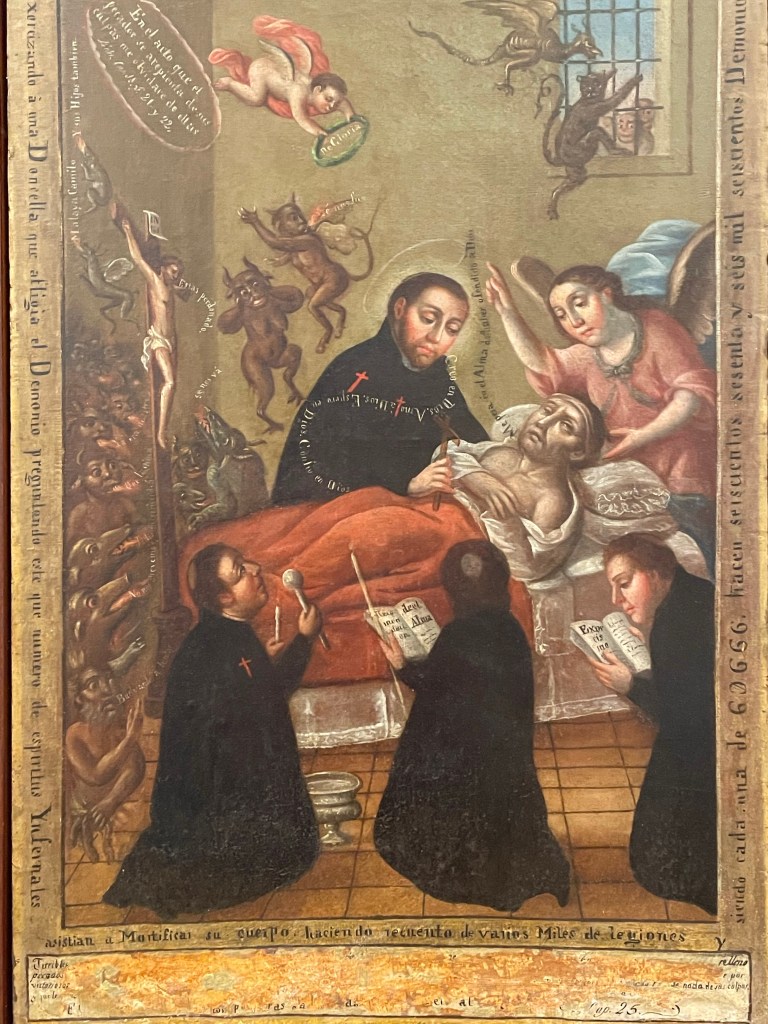
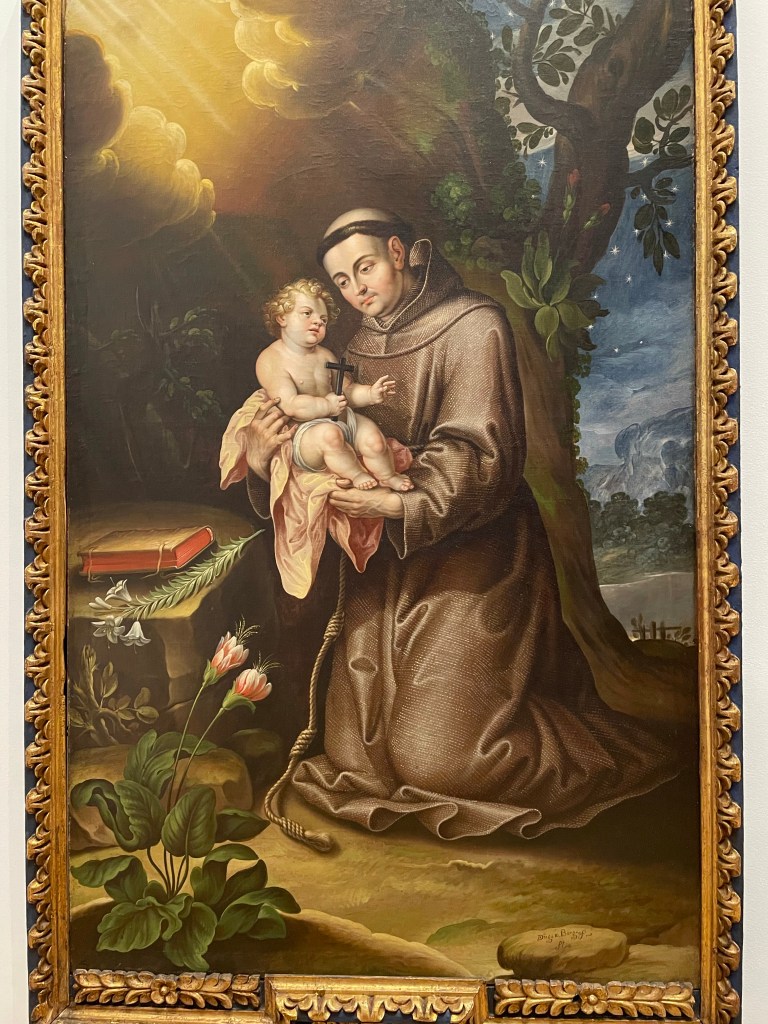
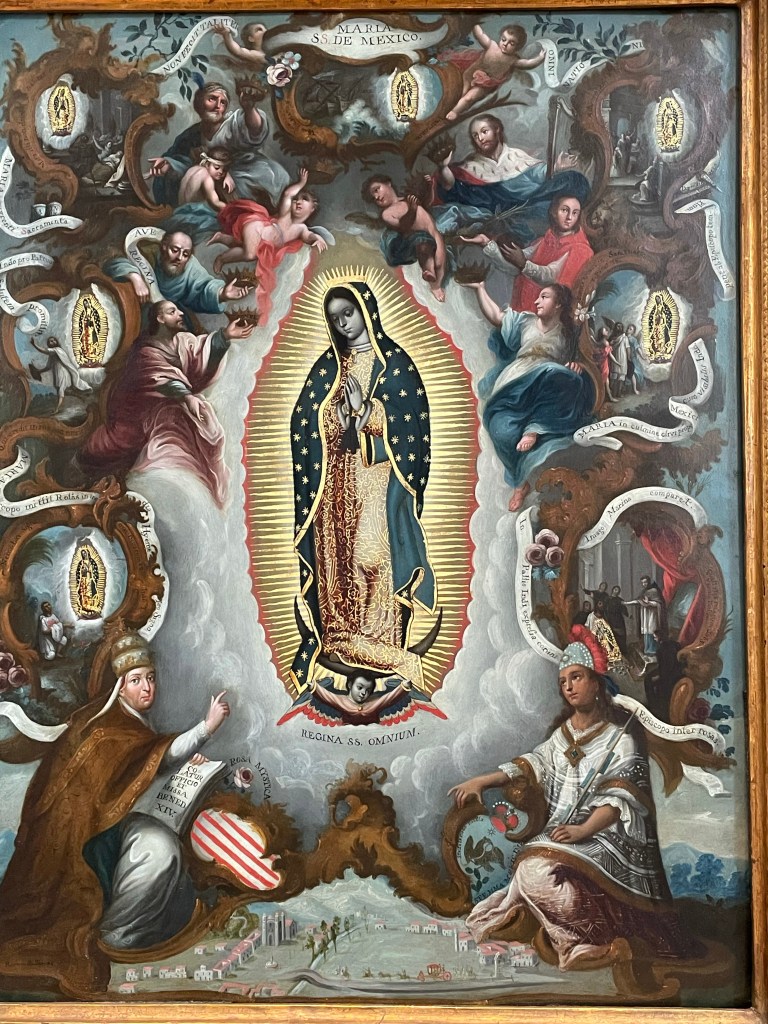
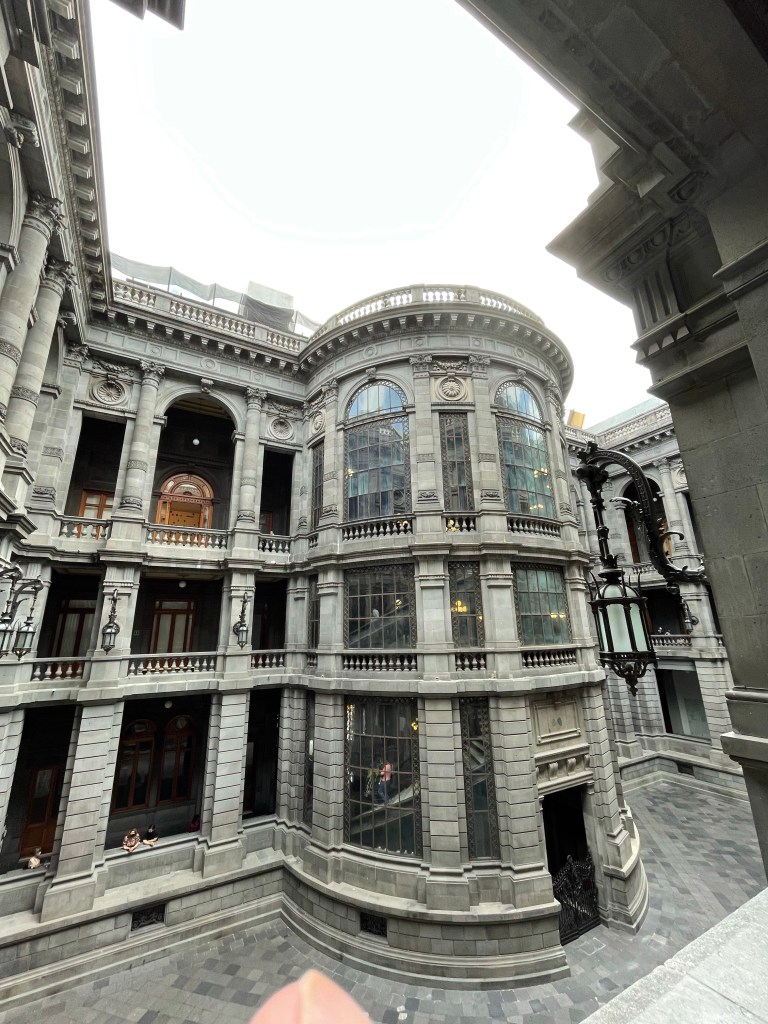
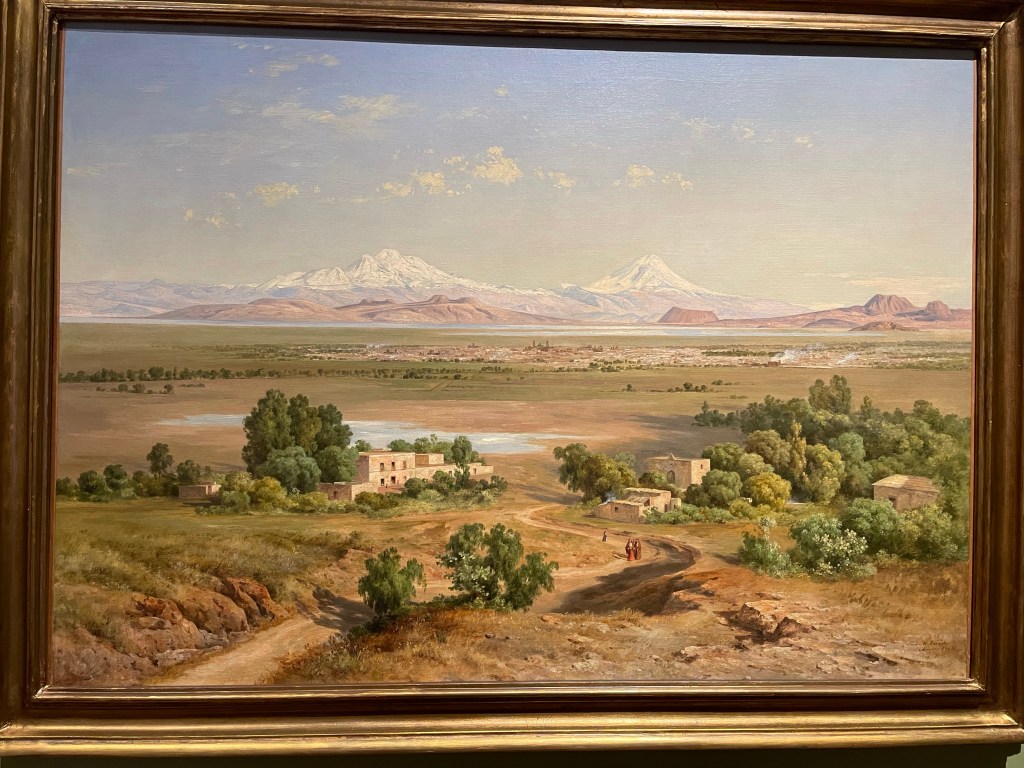
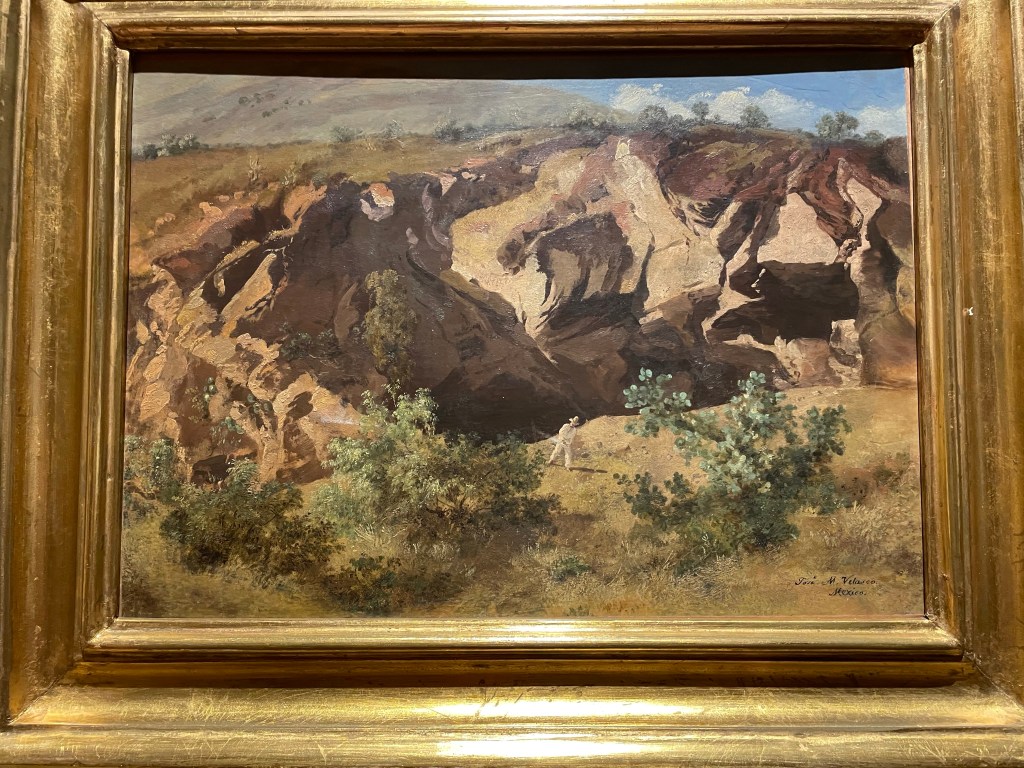
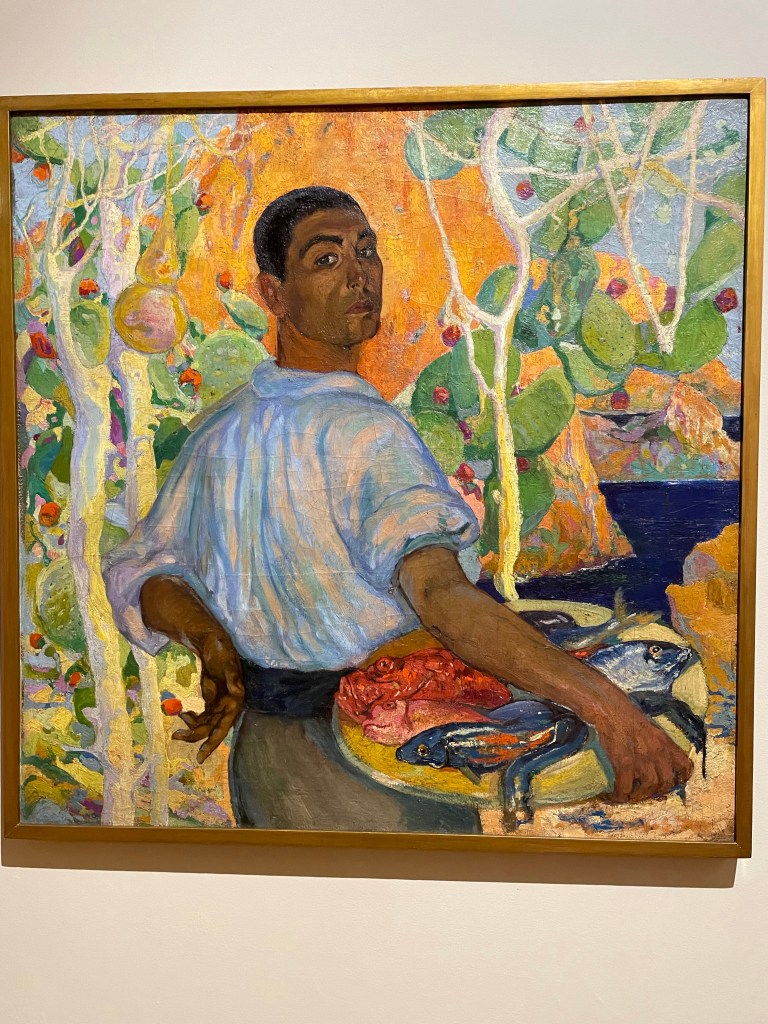
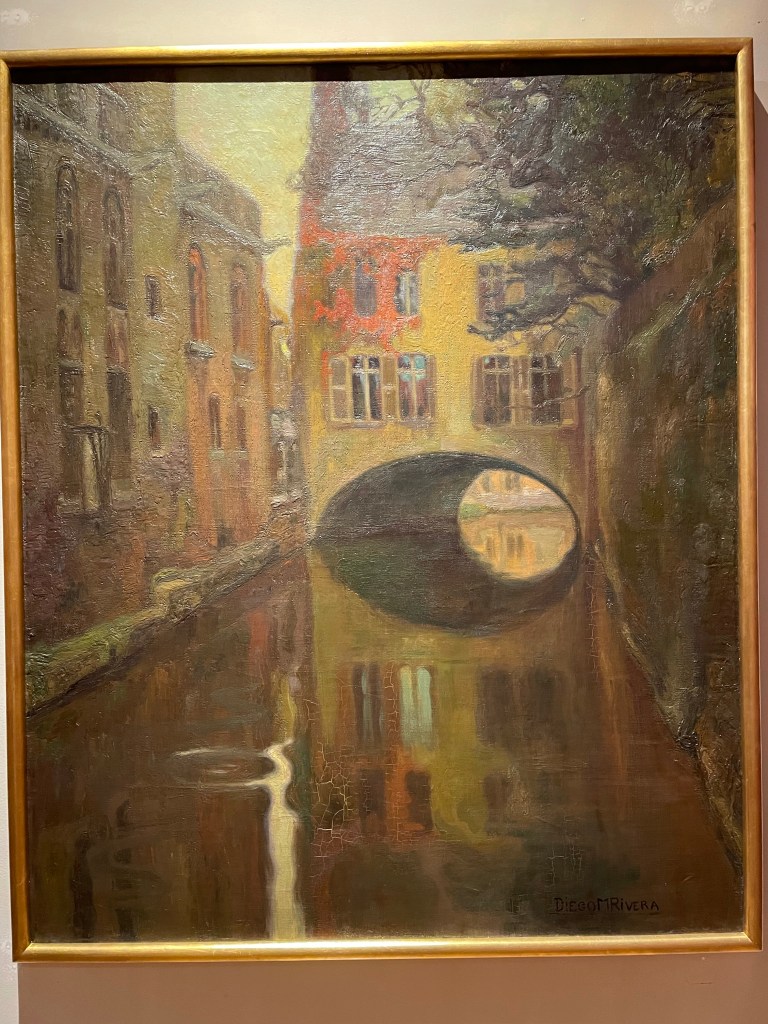
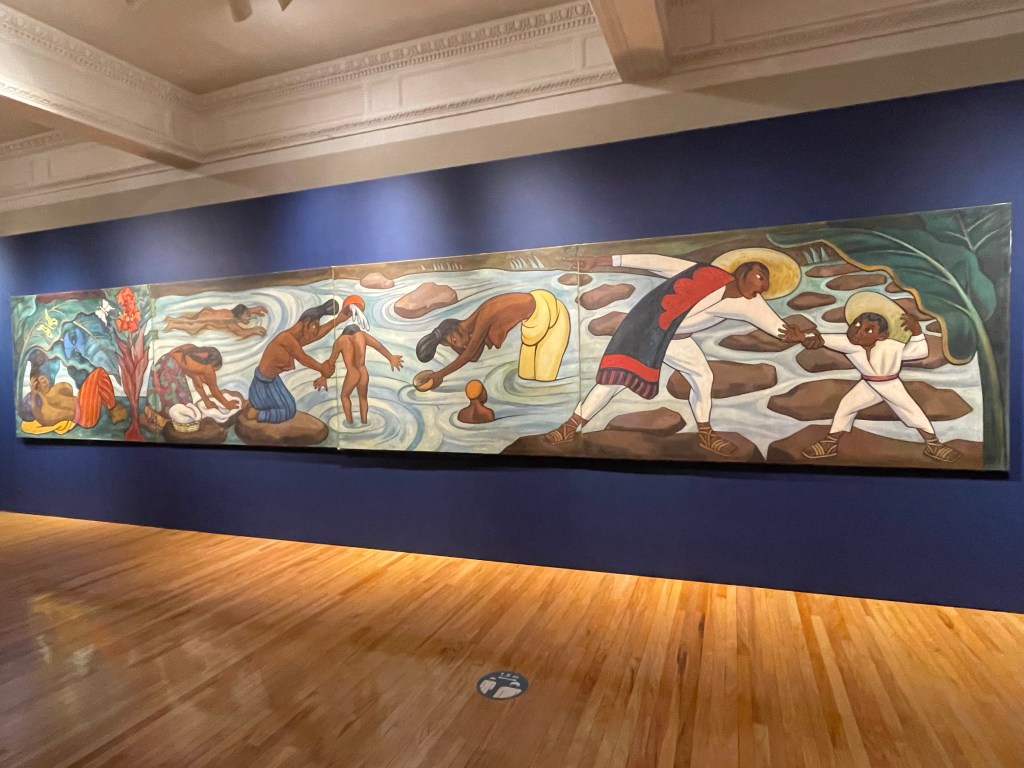
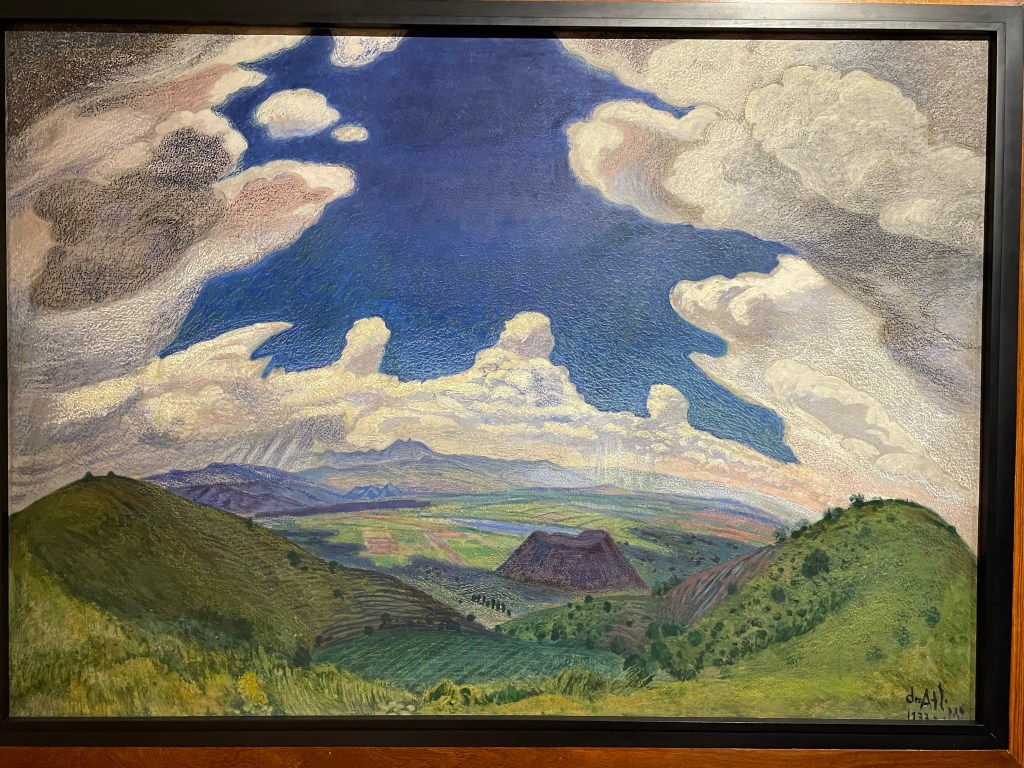
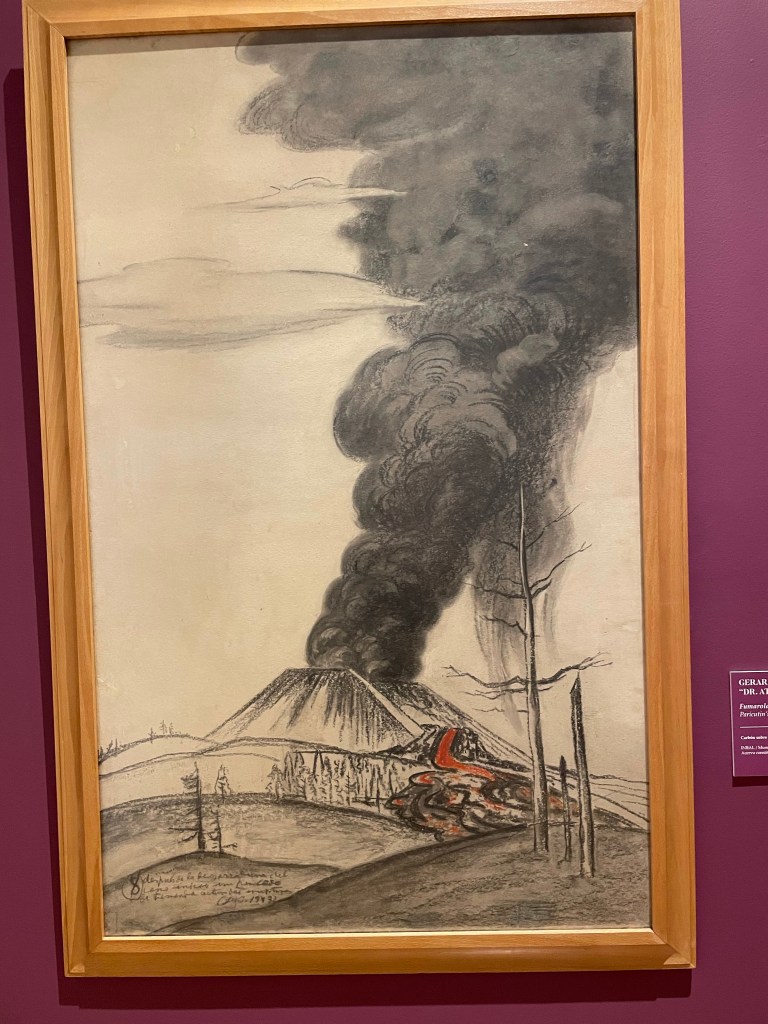
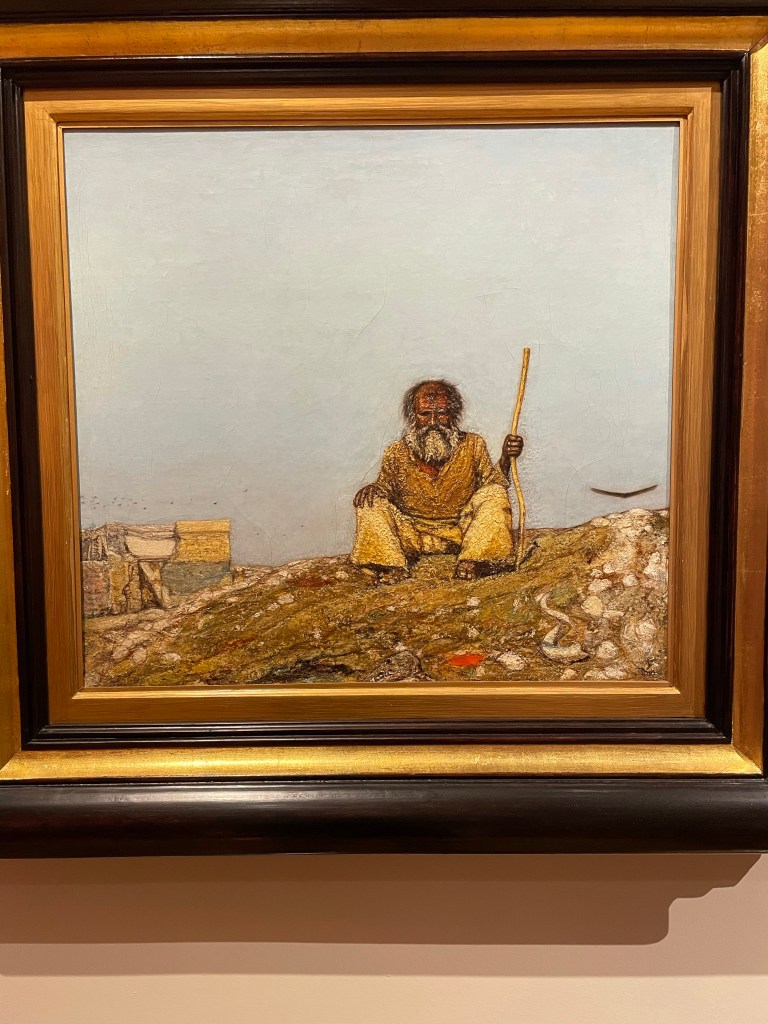
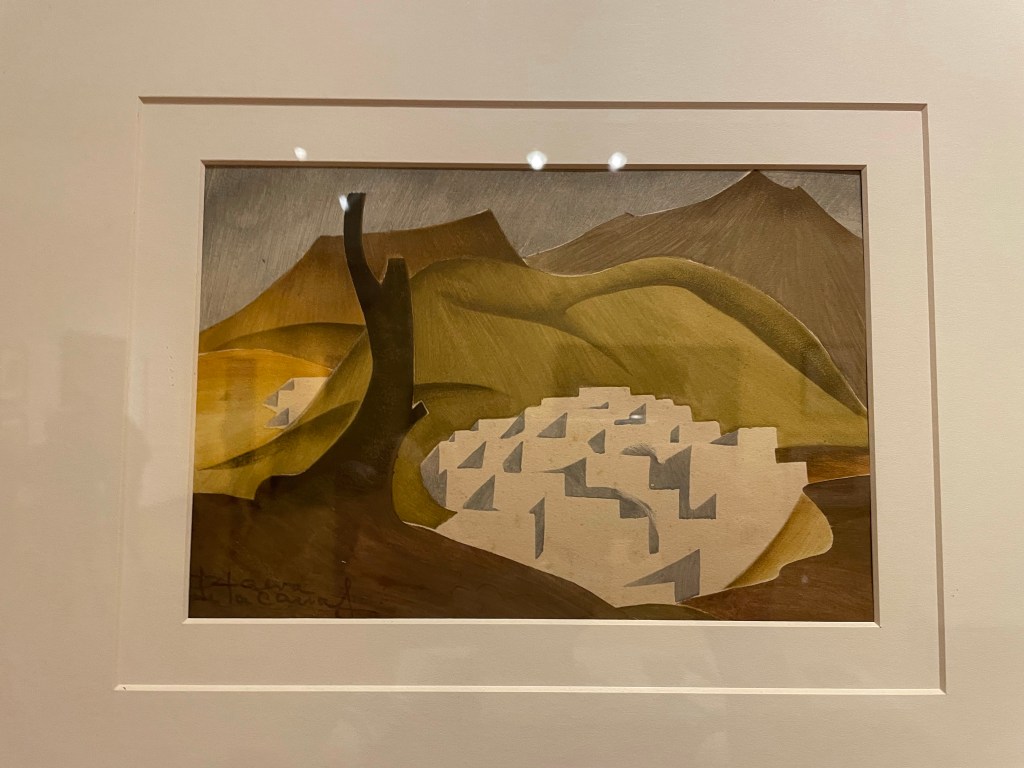
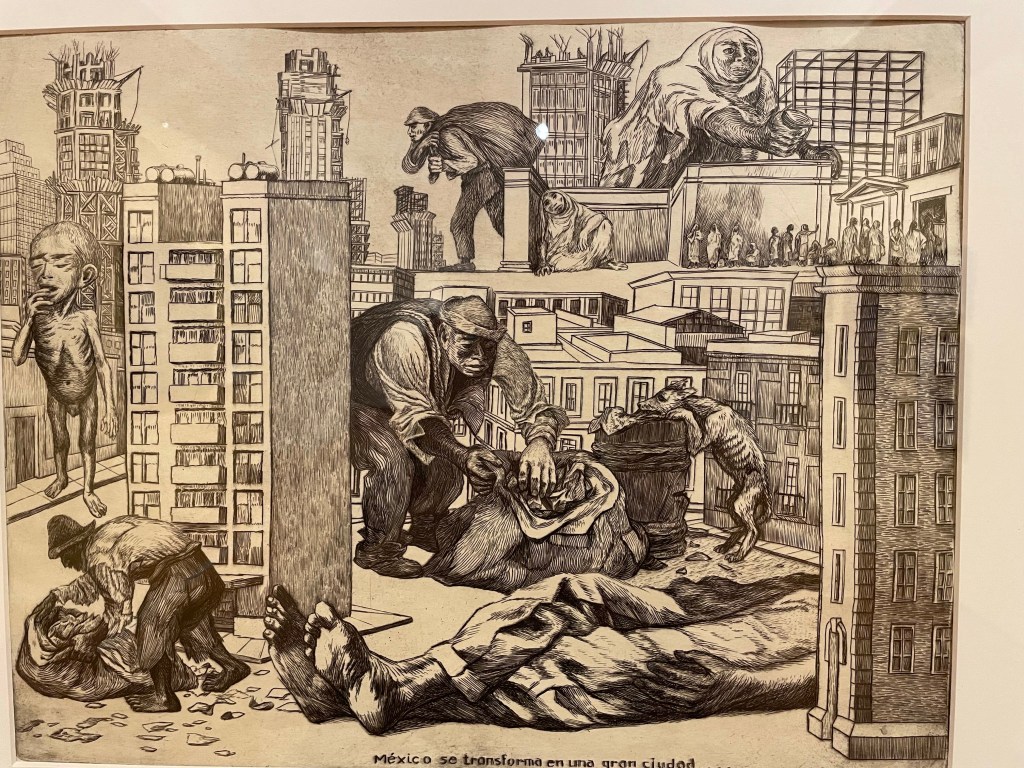
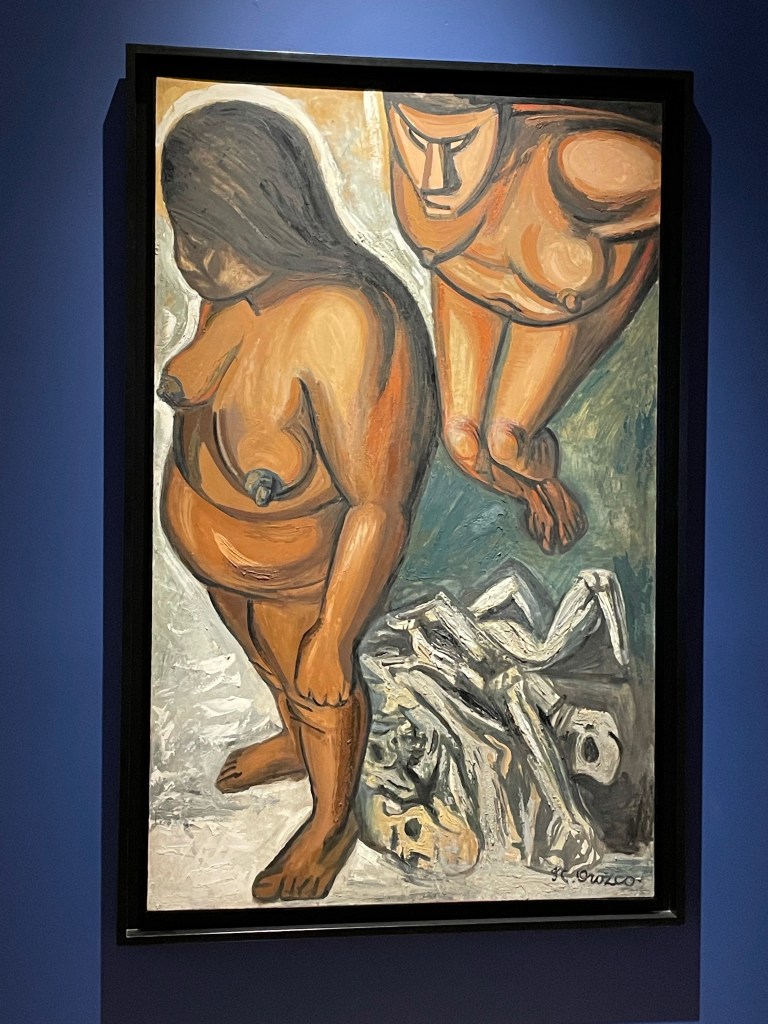
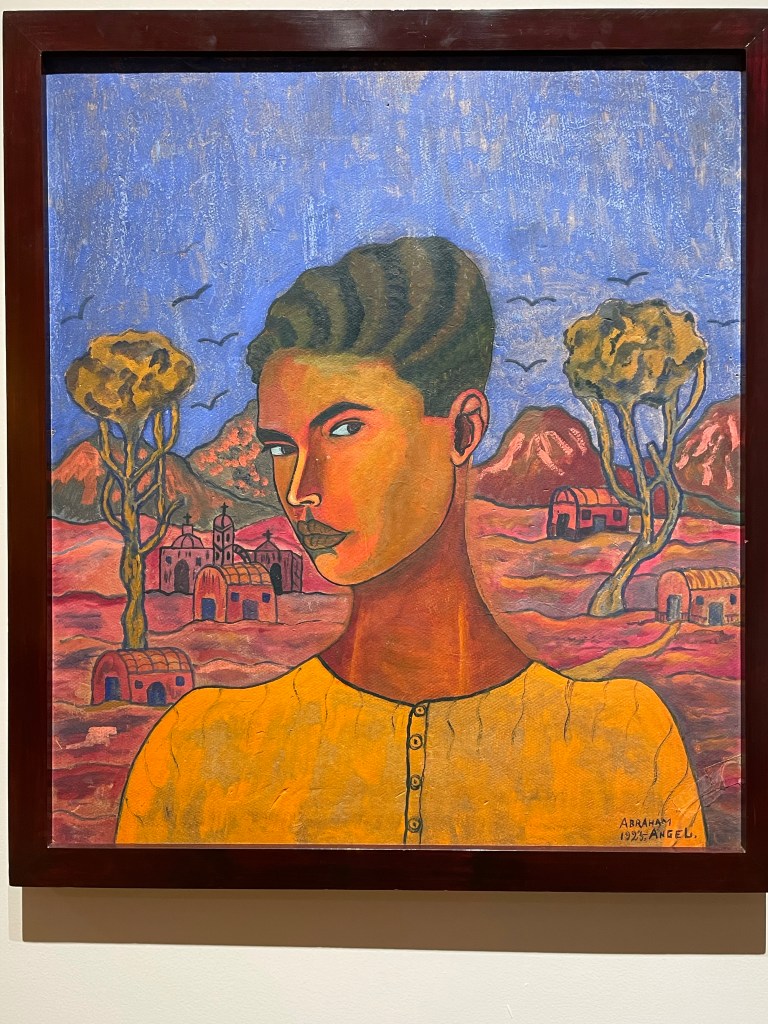
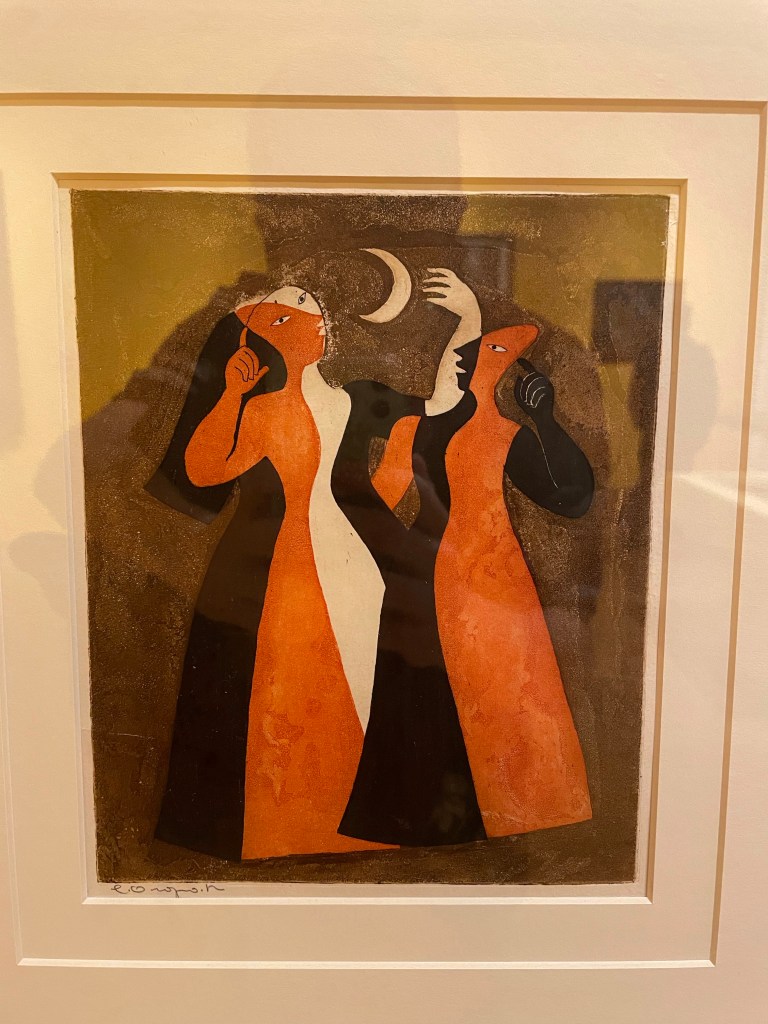
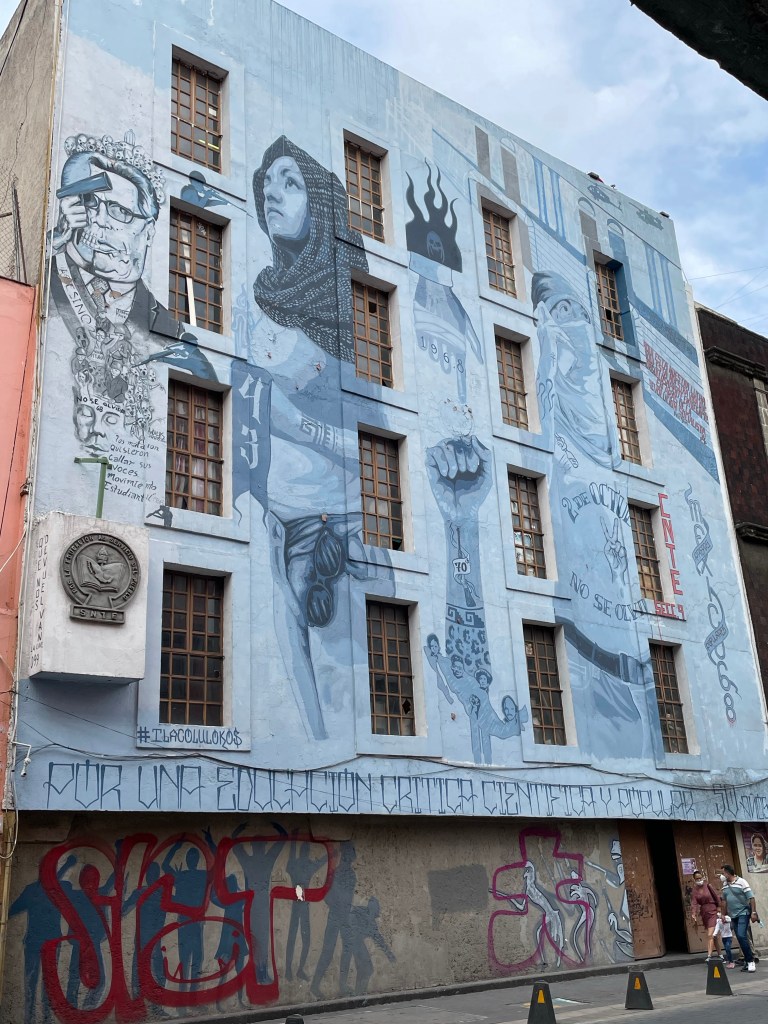
A fountain in CoyocánDeath is political, and so are many ofrendas. This one in Coyoacán, the biggest I’ve seen, is dedicated to journalists who died in the line of work. I’ve also seen ofrendas for victims of femicide, as well as those who died crossing the borders.At the Museum of Popular CultureThe ofrenda in the Museum of Popular Culture Alebrijes, maché monsters which are popular in Mexican folk artThis clay radio made me laughSome Nahuatl vocabThere are more murals in Mexico City than any other city I’ve been in, with the possible exception of Denver. There’s also a ton of graffiti (not on the murals, but on anything that’s not a mural) which confirms my suspicions that you can’t have one without the other. The roped-off part of the Zócalo The not-roped-off part of the Zócalo La Catrina, a lady skeleton who serves as the de facto mascot of MexicoAnother CatrinaThe main fresco in the National Museum of the ArtsEarly Spanish art made in Mexico. While I don’t normally like this style of religious art, these paintings were interesting because they were painted by Europeans in the new world. These are the religious paintings of people who decided to cross the ocean, to a completely foreign land, where everyone is dying of diseases and war. to convert a bunch of people who don’t speak your language and want you to leave. The job of these missionaries bordered on insanity, and their paintings give an interesting look into how they viewed themselves. I’m pretty sure the dragon Mary is stepping on is supposed to represent Quetzalcoatl, the serpent god of the Aztecs. Interestingly, there are some mormons who now believe Quetzalcoatl was one incarnation of Christ in the Americas, as there are some basic similarities in their narratives. Life must’ve sucked in the pastNew world, new meA very fancy infograficThis is one of several paintings about the apparition of the Virgin of Guadelupe, which I saw yesterday. It’s one of the earliest and best examples I’ve seen of a painting about another painting. The interior of the museumAfter the Mexican Revolution, there was an effort to reinvent Mexican identity as something distinct from that of Spain, which manifested itself most immediately in the production of landscapes. In the 1900s, painters discovered that you can use colors. Diego Rivera is probably the most important Mexican artist. He studied in Europe (this is from his impressionist phase, but he also had a cubist phase, during which he hung out with Picasso and Braques), but upon returning to Mexico, he began to feel that the European styles were bourgeois and inaccessible to regular people. Thus, he became one of the founding fathers of the Mexican muralism movement, which focused on painting big, didactic works in public spaces with the goal of enlightening the masses. The painting above is interesting because it’s really different from his later work and captures his range. He only did impressionism for a couple years, but he was quite talented while he did. A later Rivera work. A painting by Dr. Atl, a famous Mexican landscape impressionist. I wasn’t familiar with his work prior to attending the Museum, but it was some of my favorite. The picture doesn’t do justice to the strength of the colors. Another Dr. AtlI like the simplicity of this oneThe caption reads, “Mexico is transforming into a big city”A painting from Jose Clemente Orozco, another pioneer of the muralist movement. The ofrenda at the Art MuseumThe influence of the muralists can be felt all over the city. This mural commemorates the Tlatelolco massacre of hundreds of protesters in 1968.






 AdamFendos.blog